
Arizona monsoon season usually runs from summer into early fall, roughly July through September. After months with little or no rain, storms arrive fast with strong wind, dust and a lot of water in a short time. Roofs, drains, gutters and stucco that seemed fine all year suddenly have to handle a heavy load at once.
Most monsoon damage we see in Phoenix homes is not a surprise once you look closely: a dried out vent boot, a clogged roof drain, a yard that slopes toward the house, a sewer line that was already slow. This monsoon season home checklist covers the parts of the house that usually show problems after the first storms, in the order we would check them.
When should you do a monsoon checklist?
The best time is late spring or early summer, before the first storm, when it is still possible to schedule repairs without a rush. Roofers, plumbers and painters get busy once the storms start, and a small repair is always easier to plan than an emergency.
Then walk the house again after the first big storm. That first heavy rain shows you exactly where water goes, and it is much easier to fix a problem you have seen than one you are guessing about.
Roof, flashing and vent pipes
From the ground or a safe ladder, look for cracked, slipped or missing tile, and curled or missing shingles. Sun and heat age a roof faster in the desert, and monsoon wind finds every loose piece. Check the flashing around chimneys, skylights, walls and the plumbing vent pipes that go through the roof.
The rubber boots around those vent pipes dry out and crack in the sun, and they are one of the most common leak points we find. Water runs down the outside of the pipe, into the attic and onto the ceiling below a bathroom or kitchen. On flat roofs, clear debris from roof drains and scuppers so water does not pond, because standing water finds any weak seam.
Gutters, downspouts and roof runoff
If your home has gutters, clean out leaves, dust and nests, and make sure the joints are tight. Each downspout should send water at least a few feet away from the house, not straight down next to the wall. A short extension or a splash block is an inexpensive fix that protects the foundation. Also check that no downspout is crushed, disconnected or buried, which often happens after yard work.
Many Valley homes have no gutters at all, so the roof drops water along the drip line. In that case, look at where the water lands. If it digs a trench or splashes mud on the stucco, that area needs rock, a splash surface or better grading.
Yard drainage and pooling near the foundation
Water that pools next to the house is the problem to take most seriously. Most homes in the Phoenix area sit on a concrete slab, and soil that stays wet against the slab can move, settle or let moisture into the walls. After a storm, look for puddles that remain along the foundation, near patios and at the corners of the house.
The ground should slope away from the house. Make sure drains, channels and the openings in garden walls are not blocked by gravel, dirt or debris, and that new landscaping or turf did not change the slope. If a part of the yard always floods, a drain line or regrading usually solves it.
Sewer cleanout and sewage that comes back up
Heavy rain can overload the sewer system and push water back toward homes, especially those with a slow or partially blocked main line. Roots, grease and a sagging section of pipe all reduce how much the line can carry, so the first sign of trouble is often a gurgling toilet or water coming up in a tub during a storm.
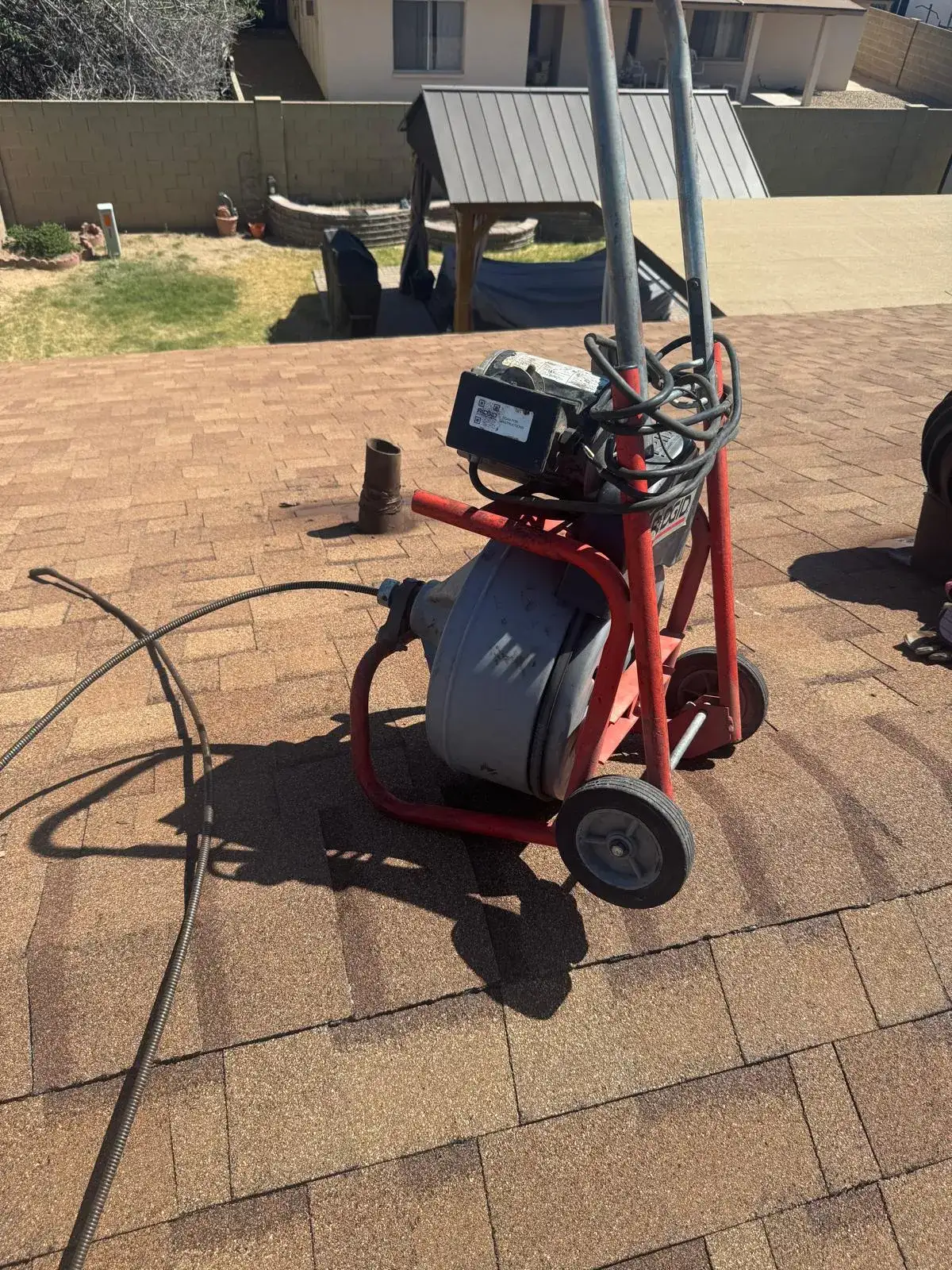
Find your sewer cleanout (usually a capped pipe outside near the house), make sure the cap is in place and not cracked, and keep it clear of rock and plants so it can be reached. If your drains have been slow, have the main line cleared before the season. We use an electric drain machine and a camera inspection so you can see what is inside the pipe, not just guess.
Stucco, paint, windows and doors
Hairline cracks in stucco and gaps around windows let wind driven rain into the walls, where it can rot framing and stain the inside drywall. Seal cracks, recaulk windows and doors, and check the weatherstripping on exterior doors.
Exterior paint that is chalking or peeling no longer protects the surface. A touch up or repaint before the season keeps water out and makes the next inspection easier, since new stains and cracks stand out on a clean wall.
Inside the house: ceilings, attic and water heater area
If you can safely enter the attic, look for dark spots on the roof deck, wet insulation or daylight around vent pipes. Inside, look at ceilings near exterior walls and below bathrooms for brown rings. Check the garage or closet where the water heater sits for signs of water coming in under the door.
Storms also bring power outages. Know where your main water shutoff and electrical panel are, and keep a flashlight near them. If you ever see water coming through a ceiling light, turn off that circuit before doing anything else.
After the storm: what to look for
Walk around the house and look at the ceilings inside for brown stains, especially near exterior walls and below vent pipes. Check the yard for pooled water that does not drain, the base of downspouts for erosion, and the stucco for new cracks. Run water in every bathroom and listen for gurgling.
A small stain caught early is a small repair: find and fix the roof spot, let the area dry, then patch and paint the ceiling. Waiting lets the water spread and can lead to mold. Because Arturo is a plumber and a general contractor, we can fix the vent pipe, the roof spot and the ceiling in one visit instead of three.