When a drain clogs, the first job is to open it. An electric drain machine, sometimes called a power snake, feeds a spinning cable into the pipe that cuts through grease, hair, wipes and roots. Most clogs clear this way.
But clearing a line does not tell you why it clogged. That is where a sewer camera inspection comes in: a small waterproof camera on a flexible cable travels through the pipe and shows the inside on a screen, so you can see the real condition of the line instead of guessing. We use both an electric drain machine and an inspection camera on our jobs around Phoenix, and this guide explains what the camera finds, when an inspection is worth it and what happens with the results.
How a sewer camera inspection works
The plumber feeds the camera into the line through an access point, usually a cleanout outside the house, a cleanout inside, a toilet that has been pulled or, when there is no other access, a roof vent. A push rod or cable moves the camera forward while lights on the camera head show the inside of the pipe on a monitor.
As the camera travels, the screen shows the distance from the access point. When the camera finds something, the plumber notes the distance and uses a locator above ground to find the exact spot and approximate depth of the camera head. The whole process is not destructive: nothing is dug up or opened just to look.
If the line is badly clogged or full of water, it is usually cleared first so the camera can see the pipe walls.
What the camera can find
Tree roots that have entered through joints or cracks, which is very common in older clay and cast iron lines in the Valley. Roots grow toward the moisture in the pipe and can fill it like a net.
Breaks, cracks and offset joints where two pieces of pipe no longer line up. A sag, or belly, where a section has sunk and holds water and waste. Heavy grease or scale that narrows the pipe. Collapsed sections. Objects that should never have been flushed, such as wipes, toys or construction debris.
The camera also shows what the pipe is made of and how it was put together, which tells the plumber what kind of repair makes sense.
When a sewer camera inspection is worth it
When the same drain keeps clogging, or when several drains back up at once. One clog can be bad luck. The same clog every few months is a sign something is wrong with the pipe itself.
Before buying a home, especially an older one with mature trees in the yard. The inspection on most home purchases does not include the sewer line, and a hidden broken line can be an expensive surprise after closing. A camera inspection before you buy gives you real information to negotiate with.
Before a remodel that adds a bathroom or moves drains, and after a backup, to confirm the line is clear and not damaged. It is also useful when you notice a sewer smell in the yard or soft, wet spots along the path of the line.
Common problems in Phoenix sewer lines
Many older Valley neighborhoods have sewer lines made of clay or cast iron. Clay pipe comes in short sections with many joints where roots can enter. Cast iron can rust and scale on the inside over the decades until the pipe wall is rough and thin.
Newer homes usually have plastic pipe, which resists roots and corrosion, but it can still sag if the soil under it settled, or break if it was damaged during landscaping, construction or digging. Grease from the kitchen, wipes and the clay and caliche soil moving around the line also play a part.
What happens after the camera
If the line is in good shape, the clog was just a clog. Regular cleaning, or simply changing what goes down the drain, may be all you need.
If there are roots but the pipe is mostly sound, cutting them out and scheduling maintenance cleanings can keep the line working for a long time. If the camera shows a break, a sag or a collapse, the inspection tells you exactly where it is and how deep, so a spot repair can be planned instead of digging up the whole yard.
Ask for the footage or screenshots. Seeing the inside of your own pipe makes it much easier to understand the recommendation and to compare options.
Camera inspection or just cleaning?
Not every clog needs a camera. A kitchen sink that clogged once after a holiday dinner usually just needs to be cleared. The camera earns its place when the problem is in the main line, when it keeps coming back or when there are other warning signs like gurgling toilets or a sewage smell outside.
Think of it this way: cleaning treats the symptom, and the camera finds the cause. Paying for repeated cleanings on a line that is broken costs more over time than finding the problem once and fixing it. On the other hand, a camera can also save you money by showing that a line you feared was broken only needed a good cleaning.
Getting to the line
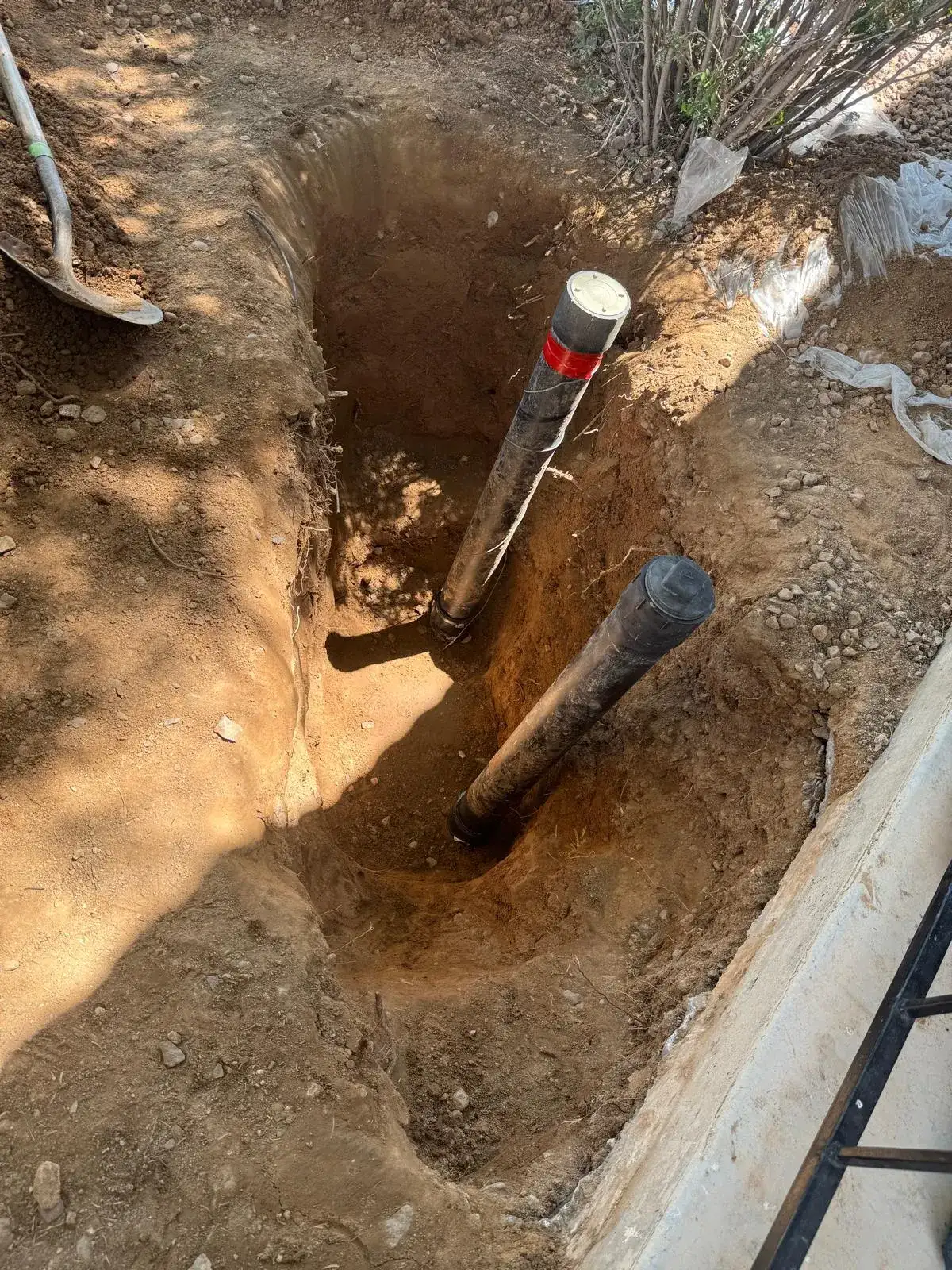
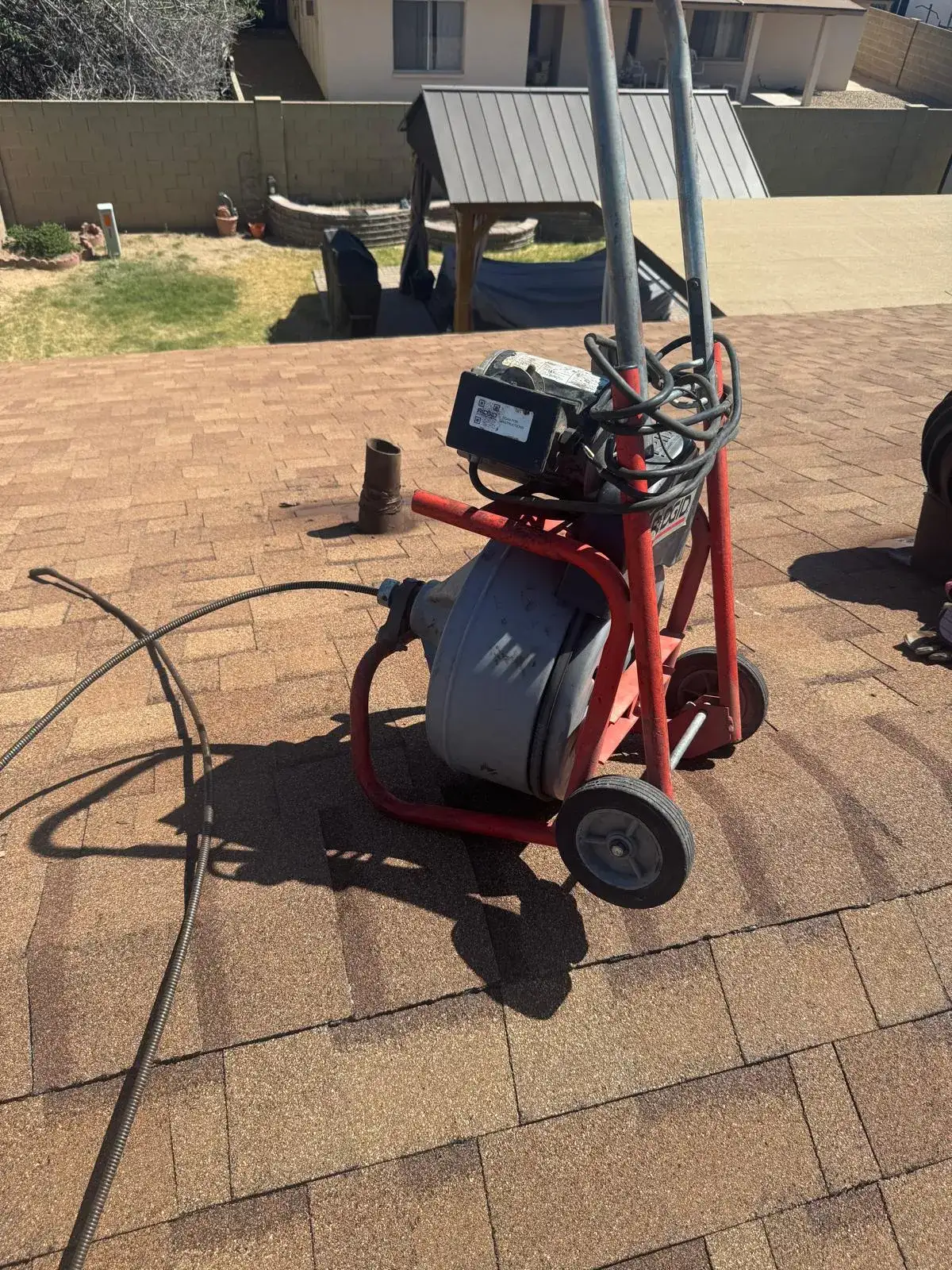
Many homes have a cleanout, a capped pipe outside where the line can be reached. When there is none, or it is buried, the line can sometimes be accessed through a roof vent, which is what our photo shows: the electric drain machine running down the vent to clear the main line.
If your home has no outside cleanout, installing one during a repair makes every future cleaning and inspection faster and easier.
Simple ways to keep a sewer line healthy
Do not pour grease or cooking oil down the kitchen drain. Throw wipes in the trash, even the ones sold as flushable. Use strainers in showers and tubs to catch hair.
Be careful when planting trees and large shrubs near the path of the sewer line, and know where the line runs before you dig for landscaping, pavers or a new patio. If your line has had roots before, a maintenance cleaning on a regular schedule is usually cheaper than waiting for the next backup.