Water in the Phoenix area comes mostly from rivers and wells that carry a lot of dissolved calcium and magnesium. That is what makes it hard. It is generally considered safe to drink, but those minerals come out of the water when it is heated or when it evaporates, and they leave scale everywhere they settle.
You see it as white crust on faucets and spots on shower glass. What you do not see is the same scale building up inside the water heater, the valves and the pipes, where it is behind a large share of the plumbing repairs we do in the Valley. Arturo has worked with Phoenix water for 26 years, and this guide explains where the damage happens, how a water softener and other options work, and simple habits that protect your home.
What hard water actually is
Hardness is a measure of dissolved minerals, mainly calcium and magnesium. Rain falls soft, but as water travels through rock, soil and the rivers that supply the Valley, it picks those minerals up. Phoenix area water is often ranked among the hardest in the United States, and the level can vary from one neighborhood or city to another depending on the source.
Your city water utility publishes an annual water quality report that usually lists hardness. A simple test strip from a hardware store also gives you a quick idea. Knowing your number helps you choose the right treatment and set a softener correctly.
Where the damage happens
Water heaters take the worst of it. Heating water pulls the minerals out, so they settle at the bottom of the tank as sediment. The heater works harder, rumbles and pops, and the bottom of the tank wears out sooner. Tankless heaters collect scale inside their heat exchanger and need regular descaling.
Toilet fill valves, faucet cartridges, shower valves and aerators get stiff, drip or lose flow. Washing machines, dishwashers, ice makers and evaporative coolers lose efficiency. In older homes with galvanized pipe, scale combines with rust and narrows the pipe until the water pressure drops. Hard water also contributes to wear inside copper lines, one reason slab leaks are so common here.
How a water softener works
A traditional water softener uses ion exchange. Water passes through a tank of resin beads that trap calcium and magnesium and release sodium or potassium in their place. When the beads are full, the unit regenerates by rinsing them with brine from a salt tank and sending that rinse water to a drain.
The result is water that does not leave scale, so water heaters, fixtures and appliances last longer and soap works better. The tradeoffs are that you need to add salt regularly, the unit needs a drain and power, and some people prefer to keep a separate drinking water line, such as a reverse osmosis system at the kitchen sink.
Many homes in the Valley already have a softener loop, a set of pipes in the garage or near the main line where a softener can connect. If your home does not, a plumber can add the connection with bypass valves so the unit can be serviced without shutting off the house.
Softener, conditioner or filter: what each one does
A water softener removes the hardness minerals. It is the most effective option against scale.
A salt free conditioner does not remove the minerals. Instead, it changes how they behave so they are less likely to stick to surfaces as scale. It needs no salt and no drain, but results vary with water chemistry, and you may still see spots on glass.
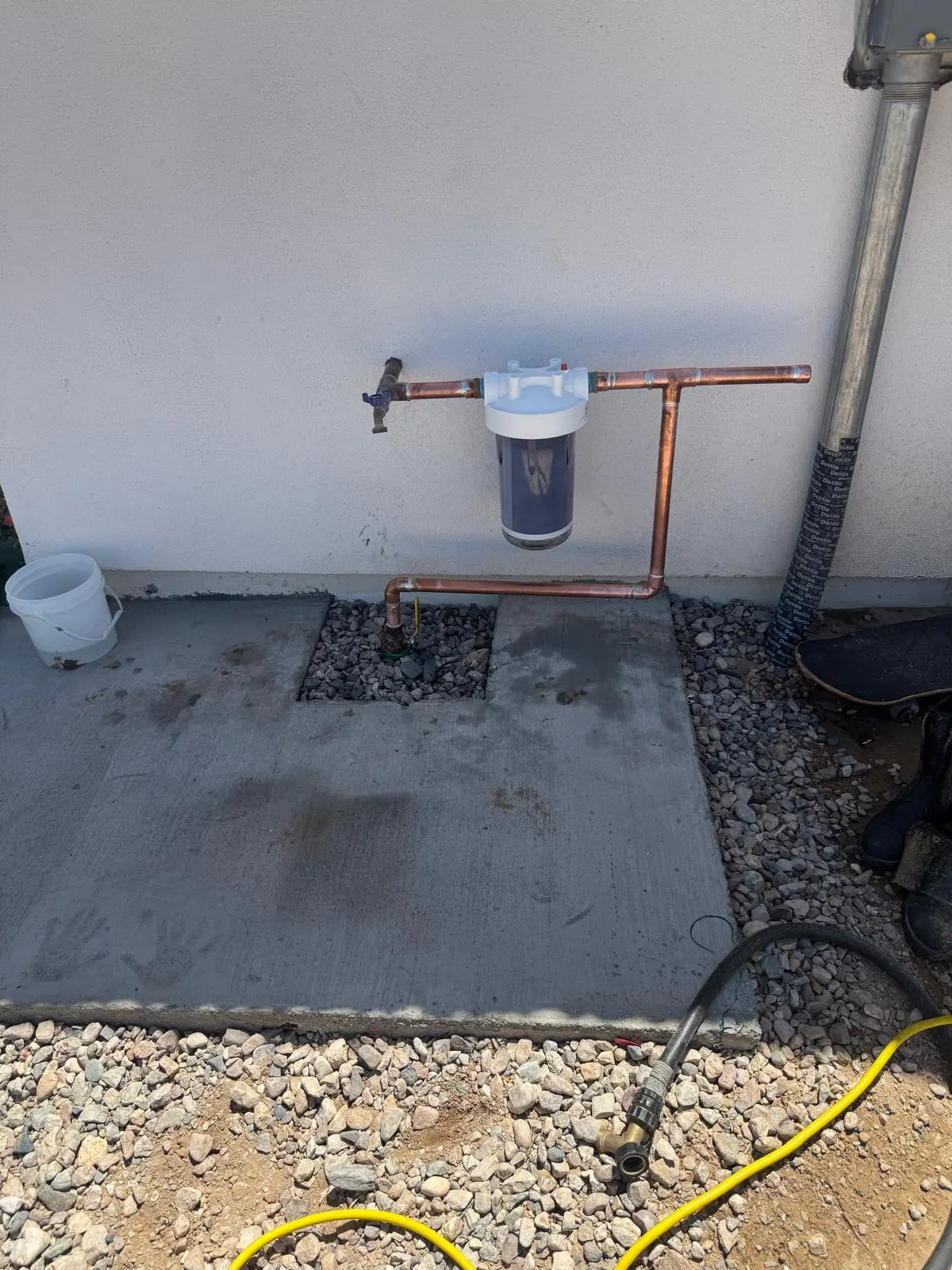
A whole house filter removes sediment, chlorine taste and odor, depending on the cartridge. It improves the water but does not soften it. A reverse osmosis system under the sink removes most dissolved minerals from drinking water only. Many homes combine two of these, such as a softener for the house and reverse osmosis for drinking.
Which option fits your home
If your main concern is protecting the water heater, valves and appliances, a water softener gives the most protection. If you cannot or prefer not to run a salt system, a conditioner may reduce scale. If taste and smell bother you more than spots, start with a filter.
Size also matters. A unit that is too small for the household regenerates constantly, and one that is too large can be a waste. The right size depends on how many people live in the home, how many bathrooms you have and how hard your water is. We help you think through the options and install the plumbing so whatever system you choose is easy to maintain.
Think about maintenance before you buy. A softener needs salt and an occasional check of its settings, a filter needs new cartridges on schedule and a reverse osmosis system needs new filters and membranes over time. The best system is the one you will actually keep up with.
Simple habits that help
Flush the water heater about once a year. Clean faucet aerators and showerheads by soaking them in white vinegar. Keep the water heater at a moderate temperature, since hotter water drops more scale.
Replace toilet fill valves and faucet cartridges when they start to drip instead of waiting for them to fail. Wipe shower glass after use to keep spots from building up. If you have a softener, keep the salt tank stocked and have the unit checked if spots and crust start coming back.
When scale becomes a repair
Low water pressure throughout the house, a water heater that runs out fast or makes loud noises, valves that will not turn and fixtures that keep dripping after new parts are all signs that scale has gone past simple maintenance.
At that point the fix may be a new valve, a new water heater or, in older homes, replacing sections of corroded pipe. Because we are also general contractors, if a repair means opening a wall or floor, we close and finish it as part of the same job.