Almost every house in the Phoenix area is built on a concrete slab, and in most of them the water lines run under that slab before coming up into the kitchen and bathrooms. When one of those lines develops a leak, the water goes into the ground under your floor, where you cannot see it. That is a slab leak, and a leaking slab can run for weeks before anyone notices.
Arturo Caballero has spent 26 years doing plumbing in Phoenix, and slab leaks are one of the calls we get most. This guide covers the signs to watch for, a simple test you can run yourself, how a plumber pinpoints the leak and what the repair actually involves, including the floor.
Why slab leaks are so common in the Valley
Three things work against the pipes under a Phoenix slab. First, age: many homes built in past decades have copper lines that are now reaching the end of their useful life. Second, water: Valley water is very hard, and the minerals in it slowly wear and pit the inside of copper pipe, especially on the hot side. Third, soil: the clay and caliche under many homes expand when wet and shrink when dry, and monsoon storms after months of drought make that movement worse.
Pipes can also rub against concrete, gravel or rebar every time the water turns on and off. Over years, that small vibration can wear a pinhole through the wall of the pipe. None of these causes are anyone's fault, which is why slab leaks happen even in well kept homes.
The signs you can see, hear and feel
A warm or hot spot on the floor. If a hot water line is leaking, the tile or wood above it can feel noticeably warmer than the rest of the room, especially in the early morning. Pets often like to lie on that exact spot.
The sound of running water when nothing is on. At night, with every faucet, toilet and appliance off, listen near the floor, the base of the walls and the water heater. A steady hiss or trickle is a strong clue.
A water bill that jumps without a reason. Compare the last few months with the same months last year. A sudden increase with no new pool, guests or landscaping deserves a check.
Damp carpet, swelling baseboards, lifting wood floors or a musty smell. Water from below can rise through the slab and soak flooring from underneath. You may also see new cracks in tile or concrete, low water pressure throughout the house, or a water heater that seems to run all the time.
The water meter test, step by step
Turn off every fixture and appliance that uses water, including the ice maker, the softener if you have one and the irrigation system. Go to the water meter, usually in a box near the street, and look at the small leak indicator, often a triangle, star or small dial. If it is turning while nothing in the house is on, water is going somewhere.
Next, close the main shutoff valve at the house and watch the meter again. If it stops, the leak is on the house side, which points to a slab leak or a hidden leak in a wall. If it keeps moving, the leak may be in the service line between the meter and the house, which is a different repair. Write down the meter reading before bed and check it in the morning for a second confirmation.
Hot line or cold line: what the clue tells you
A warm floor, a water heater that cycles often or hot water that takes longer to arrive all point to a leak on the hot side. This matters because hot water lines tend to fail first in hard water areas, and a hot side leak also wastes the energy you paid to heat that water.
If you can safely reach the cold water valve on top of the water heater, close it for a few hours and watch the meter. If the leak stops, it is very likely on the hot side. If it continues, it is on the cold side or the main line. This information helps the plumber narrow the search before opening anything.
How a plumber finds the exact spot
Nobody wants to break up a whole floor to find a leak the size of a pin. The goal is to pinpoint it first. Plumbers isolate sections of the system and pressure test them to confirm which line is leaking, then use listening equipment on the floor to hear where the water escapes. Some leaks also show up as a warm area with a thermal camera.
Once the spot is marked, the plumber knows how big the opening needs to be. A good locate is what keeps a slab repair small and neat instead of a trench across the living room.
Repair options: spot repair or reroute
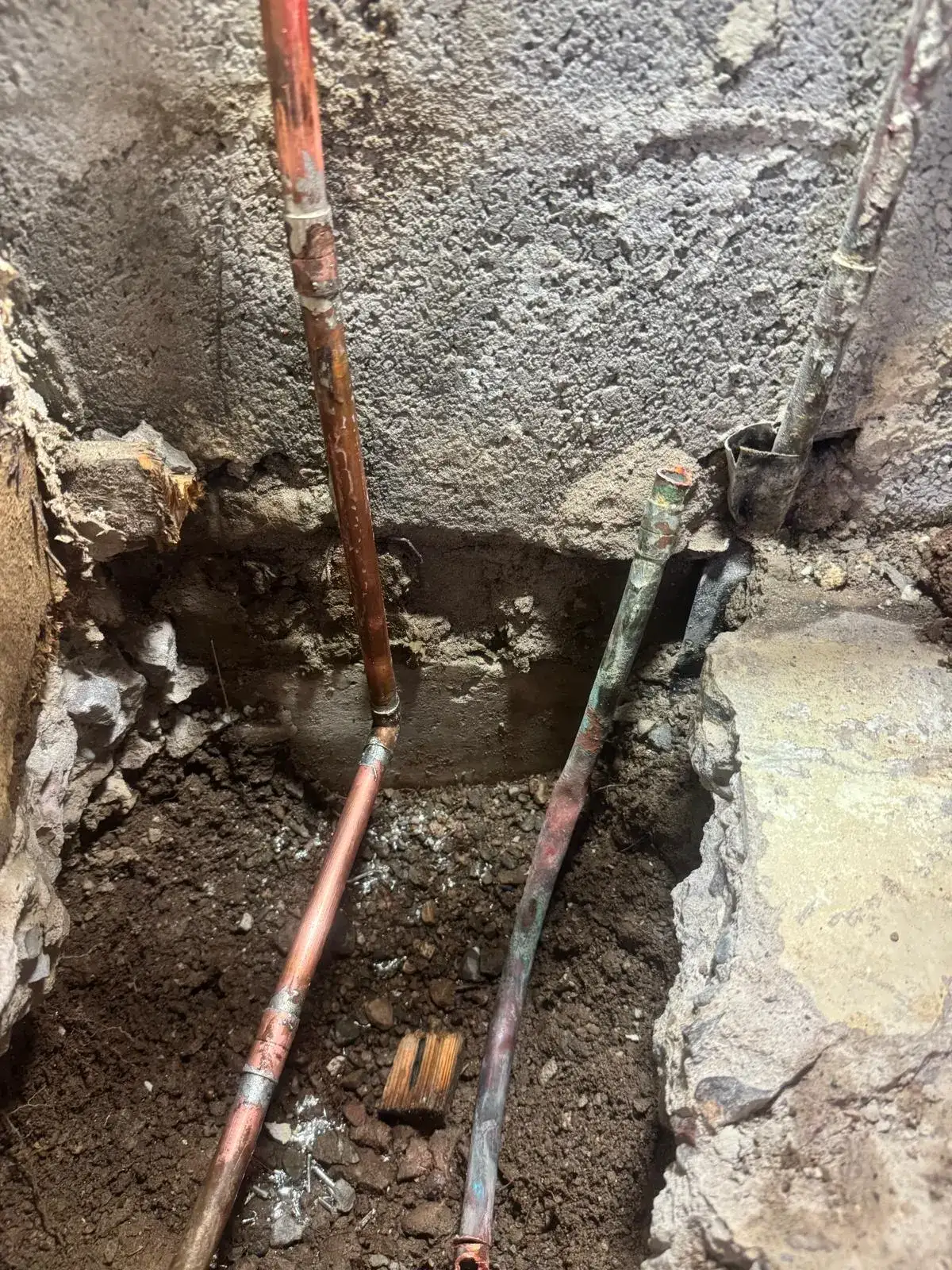
The first option is a spot repair. The floor and concrete are opened right over the leak, the damaged section of pipe is replaced with new copper or PEX, the line is pressure tested and the opening is filled with new concrete. Our own slab leak photos show exactly that: the floor opened, the old copper exposed and the new line in place.
The second option is a reroute. Instead of repairing under the slab, a new line is run through the walls or attic and the old one is capped and abandoned. This usually makes sense when the line has already leaked in more than one place, because the rest of the old pipe is likely close behind. The right choice depends on the age of the pipe, how many leaks you have had and how the house is laid out.
Closing the floor: tile, patch and finish
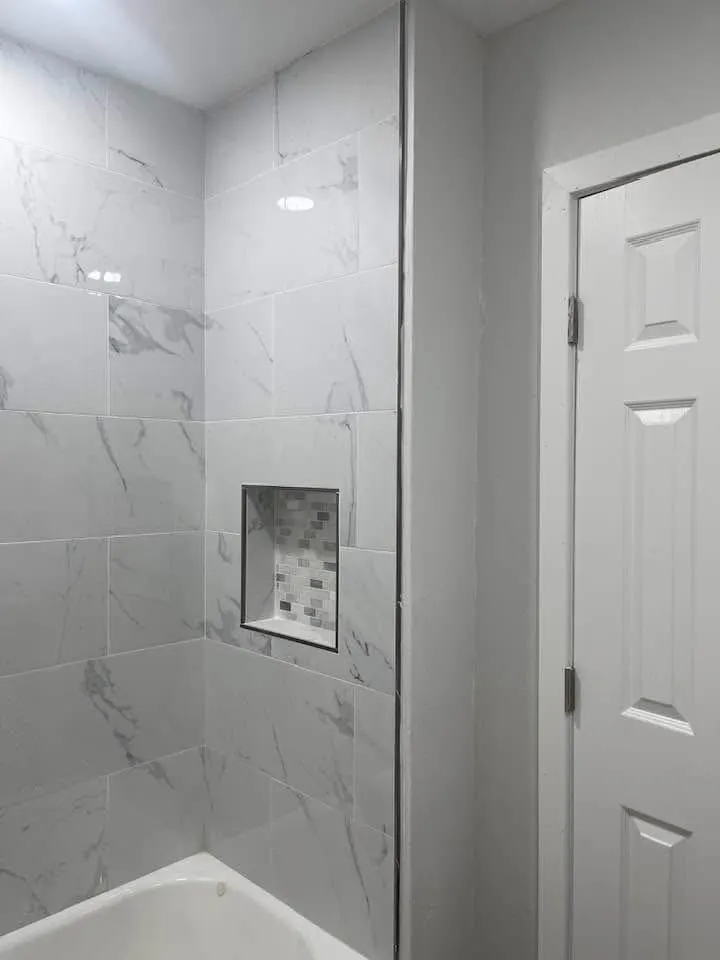
A slab leak repair always ends with an opening in the floor or in the walls. Many homeowners hire a plumber and then have to find a separate tile, drywall or painting contractor. Because Arturo's Plumbing Contractor General is both a plumber and a general contractor, we close the concrete, set the tile and patch and paint the walls as part of the same job.
If you have leftover tiles from when the floor was installed, keep them. Matching tile from the original batch makes the patch much harder to see.
What to do until the plumber arrives
If the meter test shows a leak or you notice two or more of the signs above, call soon. Water under the slab does not dry out on its own, and the longer it runs the more it can affect flooring, walls and the soil under the foundation. Until the repair, you can close the main valve at night or when you leave the house to limit the loss. If the leak is on the hot side, turning the water heater to vacation mode also saves energy.
Take photos of any damp spots, cracks or meter readings. They help the plumber and are useful if you talk to your insurance company later.